Ludo Go! - Dice Board Games
- 4.8
- Rating
- 50.00K
- Installs
- Free
- Price

 Analysis by App-foxy
I found Ludo Go! - Dice Board Games easiest to understand when I treated it as a quick shared-board game rather than as a deep strategy title. It takes the familiar Ludo idea, puts the dice and colored pieces on a phone screen, and makes the main appeal the same one that has kept this board game popular for years: several people can gather around one match, make a move, and enjoy the small tension of waiting for the next roll. The game is free, belongs to the board-game category, and comes from Easybrain.
My first impression was that it is aimed at people who want a recognizable game with very little explanation. You do not need to learn a complicated card system, memorize a long rulebook, or spend an evening building a collection before the game becomes enjoyable. The basic rhythm is immediately familiar to anyone who has played Ludo or Parchis: roll, choose a legal move, protect your pieces when possible, and try to bring them home before the other players do.
That simplicity is also the key to judging it fairly. I would not choose this as a replacement for a large strategy board game, a role-playing game, or a competitive title built around long-term progression. I would choose it when I want a light contest that can fit into a break, a casual gathering, or a shared-device moment at home. The question is not whether it reinvents Ludo. It does not need to. The more useful question is whether it makes this particular style of play convenient, readable, and enjoyable for the people sitting with you.
You May Also Like

 Blood Strike: 2.5 Anniversary
Blood Strike’s Loadouts Turn Every Drop Into a Tactical Gamble
A close look at Blood Strike’s custom loadouts: how fast access to signature weapons reshapes its battle royale rhythm, rewards preparation, and narrows the gap between fights.

 Pandora - Music & Podcasts
Pandora’s Music Is Easy to Start, but Harder to Recover
Pandora’s strength is its low-effort path from a seed to a station. Its weak spot is how much confidence it asks you to place in connection, setup, and quiet recovery.

 8 Ball Pool
 Is Built on Rivalries, Rematches, and Routine
A close look at the rivalries, rematches, shared routines, and unanswered safety questions that turn a quick pool match into a persistent mobile community.

 Samsung Music
’s Quiet Strength Is Playing What You Already Own
Its reach comes less from spectacle than from dependable access to a personal library. That simplicity is both the app’s strongest retention engine and its ceiling.

 AccuWeather: Weather Radar
AccuWeather Review: A Quick, Clear Forecast for Everyday Decisions
For everyday plans, the best forecast is the one you can understand quickly. AccuWeather makes rain timing, radar, and local conditions easy to act on, with a few trade-offs.

 Hill Climb Racing
Why Hill Climb Racing Still Turns Crashes Into One More Run
A tiny car, a bumpy hill and one more upgrade: Hill Climb Racing keeps resurfacing because its simple chaos makes every near-miss feel personal.
More From Our News Desk
View All News


How it works when several people share the moment
When several people gather around one device, I find that the best sessions begin with a little coordination: agree on the turn order, make sure everyone can see the board, and let the active player choose their move. That keeps the focus on the shared suspense of each roll rather than on who is holding the phone. It also makes the handoff feel fair, especially when younger players are joining in.
A practical game for a shared phone or tablet
The strongest household use case is simple: one person opens the game, places the device where everyone can see it, and players take turns passing it around or reaching toward the screen. That makes it suitable for a waiting room, a short family break, or an evening when nobody wants to set up a physical board. The screen replaces the dice, board, and pieces, so there is less to lose and less to clear away afterward.
In that situation, I found the game works best when everyone agrees on the order of play before starting. Ludo naturally creates moments where two people may both be watching the same board and commenting on a move, so deciding who begins and who handles the device prevents unnecessary arguments. This is not a special feature of the app; it is a useful habit for any pass-and-play board game, especially when younger players are involved.
A shared device also changes the social feel. With a physical board, players can point at several pieces at once and see the whole layout from different angles. On a phone, the person holding the device has the most immediate control, while everyone else depends on the screen size and viewing angle. I recommend using the largest available screen in the household when possible and keeping it flat or upright in a stable position. That small adjustment makes it easier for everyone to follow the turn instead of repeatedly asking what happened.
For a quick match, this arrangement is a genuine strength. It removes the setup friction that often stops people from playing a physical board game. There is no need to find the correct pieces, check whether a token has been misplaced, or remember where the dice landed. The trade-off is that the social experience depends more on the device being visible and on players respecting the turn order.
What the game asks from each player
The rules are approachable, but the choices are not completely automatic. A roll may create more than one possible move, and that is where the game becomes more interesting than simply tapping through a sequence. I like taking a second to compare options instead of selecting the first highlighted possibility. Moving a piece closer to safety may be sensible, but advancing another piece can sometimes give better flexibility on the next turn.
One useful habit is to avoid thinking only about the piece that is closest to home. In Ludo, a player with one advanced token can still be vulnerable if the rest of the pieces remain stuck near the start. I usually look at three things before confirming a move: whether the move exposes a piece, whether it gives me more choices on the next turn, and whether it prevents another player from making progress. That approach makes the match feel more deliberate without turning it into a heavy strategy exercise.
When children are playing, I would explain the rule behind a move rather than simply telling them which piece to choose. Asking, “Which piece is safer?” or “What could you do with your next roll?” keeps the game educational without making it feel like a lesson. The board is easy enough for a child to follow, while the consequences of a choice provide a gentle introduction to planning and probability.
Short turns, but not always a short session
Individual turns are easy to understand, which helps a group stay engaged. However, a full match can feel longer when several players are involved, particularly if everyone is carefully considering each move. That is not a defect in the rules, but it matters when choosing the game for a particular moment. It fits a relaxed break better than a situation where people need to leave immediately.
I would also avoid promising a perfectly calm experience in a household with competitive players. The luck of the dice can reverse the board quickly, and a player who seemed safe may suddenly be threatened. That unpredictability is part of Ludo’s appeal, but it can frustrate anyone who prefers games where careful planning has more control over the result. Before starting, it helps to agree that the goal is to enjoy the match rather than treat every unlucky roll as a personal failure.
Keeping boundaries clear on a shared device
One of the most important practical questions is who is using the device and what that means for the rest of the household. I would keep the game in a separate, clearly agreed session rather than letting one person casually take over a phone that another person needs for messages, work, or navigation. A board game may be casual, but the device itself may not be.
If the phone belongs to one household member, that person should decide when it is available and where it can be placed. Younger players should also know not to leave the game open while walking around with the device or to hand it to someone without asking. These are ordinary shared-device boundaries, yet they matter more than people expect because a pass-and-play game encourages repeated handoffs.
I would not treat a shared-device match as the same thing as separate personal play. Different people may have different expectations about what is being saved, who is responsible for the device, and whether a session should continue later. The simplest arrangement is to finish a match in one sitting, return the device to its owner, and avoid assuming that the next person wants to continue from the same point.
Coordination matters more than the rules
The game itself is easy to explain, but coordination determines whether the household experience feels pleasant. I suggest choosing a visible playing order, saying the active player’s name before handing over the device, and waiting until that player confirms the move. This prevents accidental taps and makes the match easier to follow when several people are talking.
It is also worth agreeing on how much advice is welcome. Some players enjoy discussing every possible move, while others want to make their own decisions. In my experience, a useful compromise is to let the active player ask for suggestions, but not allow everyone else to direct the turn automatically. That preserves the personal choice at the center of the game and reduces the chance that the loudest person effectively plays for somebody else.
For a household with mixed ages, I would give younger players extra time without changing the rules. The game is more enjoyable when a child can examine the board and understand why a move was made. At the same time, older players should not pretend that every move is equally good if the child is trying to learn. A brief explanation after the turn is usually more helpful than correcting the player while the decision is still being made.
Age context and trust
The listed content rating is Everyone, which matches the straightforward nature of the board-game format. There is no need to introduce the game as something intense or mature. Even so, an age rating does not replace ordinary supervision. A younger child may understand the goal but still need help with turn order, reading the board, or handling a shared device carefully.
I would be comfortable presenting it as a family-friendly option for a child who already understands basic taking turns. I would be more cautious with a very young child who tends to tap repeatedly, grab the device, or become upset when luck changes the result. The issue there is not the theme of the game; it is whether the child is ready for a rule-based activity where they cannot control every outcome.
Trust also has a social side. Because the game is played on one screen, everyone can usually watch the visible action, which makes it easier to discuss a move openly. Still, the person holding the device should not rush through another player’s turn or make a selection without agreement. A simple household rule that the player must announce the chosen piece before tapping can make the session feel fairer, particularly when the screen is small or several people are watching from different seats.
For adults, the same point applies in a different way. Ludo is intentionally accessible, so experienced players may find it too dependent on luck or too light for a serious game night. That does not make it poor; it simply places it in a particular lane. It is a social filler and a familiar pastime, not a test of advanced tactical skill.
Where it stands beside physical boards and other digital games
Compared with a physical Ludo or Parchis set, the digital version is cleaner and faster to start. The app handles the dice and piece movement, which reduces disputes about whether a token was moved correctly. It is also easier to store because the whole game stays on the device. The physical alternative still has a warmer table presence, a larger shared play area, and a more natural way for everyone to point at pieces and plan together.
Compared with more elaborate digital board games, this one is less demanding. There is no need to learn a new universe, understand a large collection of cards, or spend time preparing a personalized strategy. That makes it a better choice for guests who may not play games regularly. The downside is that people looking for deep progression, extensive customization, or a campaign will probably find the experience limited.
It also differs from fast puzzle games because the fun is not only in personal performance. The appeal comes from watching other players take risks, reacting to their progress, and sharing the surprise of a fortunate or unfortunate roll. If I am alone and want an intense challenge, I would usually choose a game designed around individual skill. If I have another person nearby and want something immediately recognizable, this format makes more sense.
Version, access, and everyday practicality
The current version is 1.1.0, and the game requires Android 8.0 or later. That makes checking the device’s operating-system version a sensible first step before planning a household game session. A compatible device is particularly important when the phone belongs to an older family member, because a game that works on one household phone may not necessarily be available on another.
The game is free to use, which lowers the barrier for trying it casually. I still recommend treating “free” as a reason to test the experience, not as a guarantee that it will suit everyone. The more important practical questions are whether the device is comfortable for shared viewing, whether the household can agree on turn-taking, and whether the game’s luck-driven style matches the group’s expectations.
Its public response is strong, with an average of 4.8 from around 2.1 thousand ratings, alongside more than 50 thousand installs. Those figures suggest that the straightforward concept is connecting with players, but they should not replace personal judgment. A high average can tell me that many people enjoy the format; it cannot tell me whether my household prefers luck-based games or whether a small phone screen will be comfortable for everyone.
Who should choose it, and who should skip it
I would recommend it to someone who wants a familiar digital Ludo game for relaxed, shared play. It is especially suitable for households that enjoy taking turns, for players who do not want a complicated rules explanation, and for anyone who likes the small drama created by a dice roll. It can also be a useful choice when a physical board is unavailable but several people still want a recognizable table-game experience.
I would skip it if my priority were precise control, serious competitive depth, or a long-term progression system. I would also look elsewhere if the intended group dislikes waiting for other players or becomes frustrated when luck decides an important moment. In those cases, a skill-focused puzzle game or a more strategic board title would offer a better match.
My best tip is to use it deliberately: choose a clear shared-device spot, agree on the order, let the active player make the final decision, and treat the match as a social activity rather than a race to prove who is best. That setup brings out the game’s real strength and reduces the most common household friction.
My household verdict
After looking at it as a shared activity rather than just another board-game download, I see a clear purpose. Ludo Go! - Dice Board Games is a convenient way to bring a familiar Ludo match to a phone, with enough decision-making to keep turns meaningful and enough luck to make the result uncertain until late in the game.
Easybrain has kept the concept approachable, and that is exactly why it can work across a mixed household. The Everyone rating, free access, and modest Android requirement make it easy to consider, while the strong average response shows that many players appreciate its simple format. The limitations are equally clear: shared-screen play needs coordination, the device can feel cramped, and the dice-driven outcome will not satisfy players who want deep control.
My final recommendation is therefore specific rather than universal. I would install it for casual family or friend sessions where people can sit together, agree on boundaries, and enjoy a traditional board-game rhythm without setting up a physical set. I would not present it as a replacement for every board game. Used in the right household moment, though, it is a friendly, low-pressure option that turns a spare device into a small shared game table.
FAQs for Ludo Go! - Dice Board Games
01What is Ludo Go! - Dice Board Games?
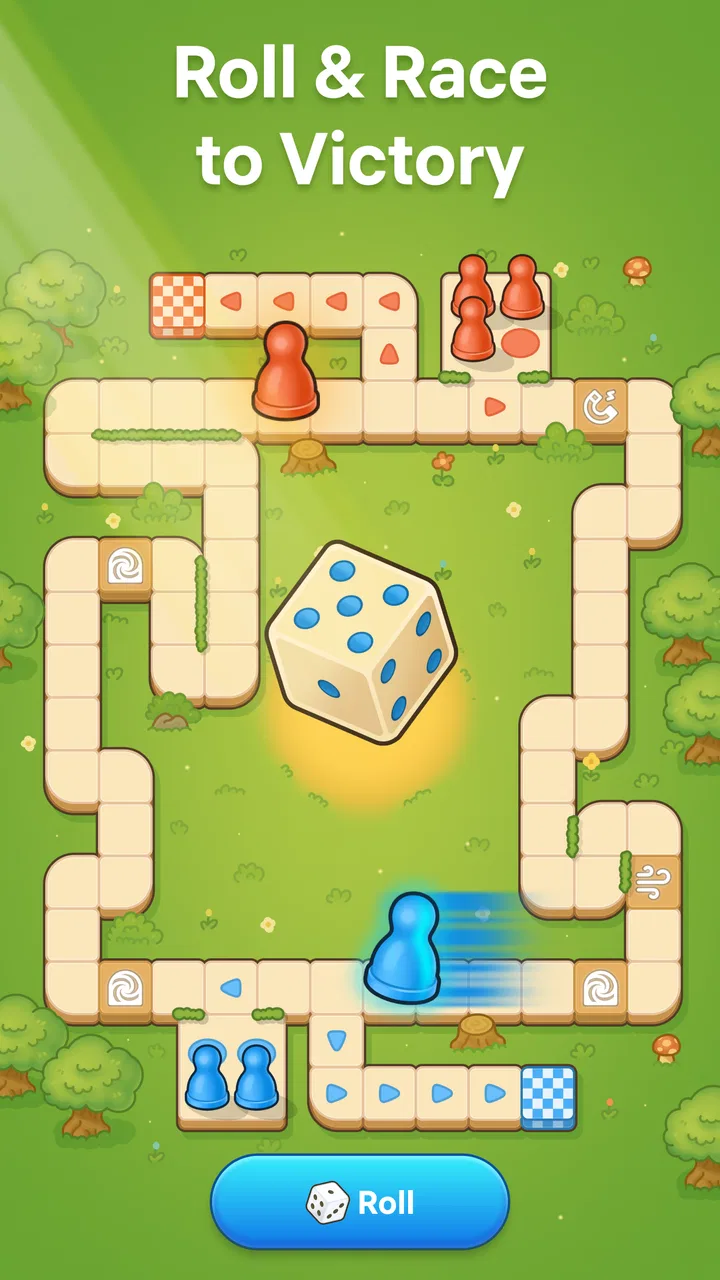
Ludo Go! - Dice Board Games is a digital version of the classic Ludo board game, built around dice rolls, colorful tokens, and a race to reach the center of the board. After trying it, I found the rules easy to understand, making it suitable for casual players and families. The game focuses on short matches, simple controls, and familiar turn-based gameplay rather than complicated strategy systems.
02Can I play Ludo Go! offline or without an internet connection?
Whether you can play every mode offline may depend on the version installed and the features currently offered by the developer. In my experience with Ludo-style games, local play against computer opponents is usually the most reliable option without an internet connection, while online multiplayer, advertisements, leaderboards, and some rewards may require access to the internet. It is worth checking the mode descriptions before downloading.
03Does Ludo Go! support multiplayer games?
Ludo Go! is designed primarily as a multiplayer-style board game, so playing with other people is one of its main attractions. Depending on the available version, you may be able to compete against friends on the same device, challenge computer-controlled opponents, or join online matches. Before starting a game, review the multiplayer menu carefully, because player limits, invitations, and connection requirements can vary.
04Is Ludo Go! - Dice Board Games free to download and play?
The game can generally be downloaded without an upfront purchase, but free access may include advertising, optional in-app purchases, or limitations on certain features. During normal play, these extras can affect the experience, especially if you frequently restart matches or claim rewards. Parents should also review purchase settings, while all players should check the store listing for the latest pricing and payment details.
05Is Ludo Go! suitable for children and beginners?
Ludo Go! is generally approachable for beginners because its controls and rules are straightforward: roll the dice, move the pieces, and try to bring all tokens home before your opponents. It can be enjoyable for children and families, although parents should consider advertisements, online interaction, and optional purchases. Younger players may also need help understanding turn order, safe spaces, and the luck-based nature of dice rolls.
Pros
- Simple rules make it easy for beginners to start playing.
- Quick matches fit well into short breaks.
- Supports multiplayer fun with friends and family.
- Bright board design is clear and easy to follow.
- Dice-based gameplay offers a familiar
- casual experience.
Cons
- Luck can matter more than strategy in many matches.
- Ads may interrupt the experience between games.
- Online play may depend on a stable internet connection.
- Repeated boards and rules can feel predictable over time.
- Some features or items may require in-app purchases.

Ludo Go! - Dice Board Games
Gallery